








Enterprises across the UAE are at a defining inflection point. Agentic AI has moved from pilot to national mandate, and the technology stack capable of supporting it, from infrastructure to orchestration to security, is being built in real time.
In this emerging order, the advantage goes to organizations that move fastest from experimentation to execution: deploying agents that don’t just answer questions, but actually get the job done.
The second edition of MIT Sloan Management Review Middle East’s AI Research Forum convenes technology leaders to examine how organizations are actually turning the agentic AI mandate into deployed capability.
Capability that doesn’t just run a pilot, but ships, scales, and holds up in production.
AIRF looks past the adoption headlines to the technology stack that actually determines whether agentic AI scales: infrastructure and compute, orchestration and frameworks, security tooling, and the integration layer connecting agents to the business. It explores what’s actually being built and deployed today, and by whom.
Building on its inaugural edition, AIRF returns to Dubai in 2026 to track how fast the region is actually moving from mandate to momentum.


2023 Summit Attendee

Assistant Professor,
MIT Computer Science & AI Lab

Associate Professor of Electrical Engineering and Computer Science,
Massachusetts Institute of Technology

Professor and Chair in Digital Economy
QUT Business School

Founding Director of the Institute for Data, Systems, and Society & Professor
Massachusetts Institute of Technology
Group Director of Engineering
London Stock Exchange Group (LSEG)

Group Director of Engineering
London Stock Exchange Group (LSEG)

Group Director of Engineering
London Stock Exchange Group (LSEG)

Group Director of Engineering
London Stock Exchange Group (LSEG)
9:00
Abbie Lundberg, Editor in Chief, MIT SMR
Elizabeth Heichler, Editorial Director, MIT SMR
Six months into the UAE’s agentic AI mandate, the AI Research Forum opens with the first independent data on how enterprises are actually responding: where budget is moving and what separates organizations already deploying agents in production.
Panelists:

Geoffrey Alphonso
Chief Executive Officer,
Alef Education

Kaustubh Wagle
Managing Director and Partner,
BCG

Tim Kraska
Associate Professor of Electrical Engineering and Computer Science,
Massachusetts Institute of Technology
Moderator:

Jennifer George
Correspondent,
MIT Sloan Management Review Middle East
This keynote examines what agentic AI actually requires of an organization: not an upgrade to existing automation, but a structural redesign of decision rights once systems are authorized to act without human approval at each step.

Rahul Lakhanpal
Vice President of Product Marketing,
DarwinBox
Abbie Lundberg, Editor in Chief, MIT SMR
Elizabeth Heichler, Editorial Director, MIT SMR
The UAE’s agentic AI mandate sets specific private-sector obligations against a defined timeline. This session examines what compliance actually requires, how “autonomous execution” is defined in regulatory terms, and the pace at which enterprises are expected to act.

Tim Kraska
Associate Professor of Electrical Engineering and Computer Science,
Massachusetts Institute of Technology
Agentic capability can’t simply be bolted onto an existing platform as another feature. This session examines what it actually takes to re-architect enterprise platforms so agents are native to how the system works, not an add-on running alongside it.
Abbie Lundberg, Editor in Chief, MIT SMR
Elizabeth Heichler, Editorial Director, MIT SMR
Agentic AI raises a different set of questions once it reaches the top of the organization: not how the system works, but where it actually changes the business. This session examines where agentic AI has moved from a cost line to a genuine source of competitive advantage, what leadership is willing to bet the organization’s direction on, and where the technology still hasn’t earned that bet.
Abbie Lundberg, Editor in Chief, MIT SMR
Elizabeth Heichler, Editorial Director, MIT SMR
12:10
Abbie Lundberg, Editor in Chief, MIT SMR
Elizabeth Heichler, Editorial Director, MIT SMR

Anirudh Narayan
Co-Founder & Chief Growth Officer,
Lyzr
Panelists:

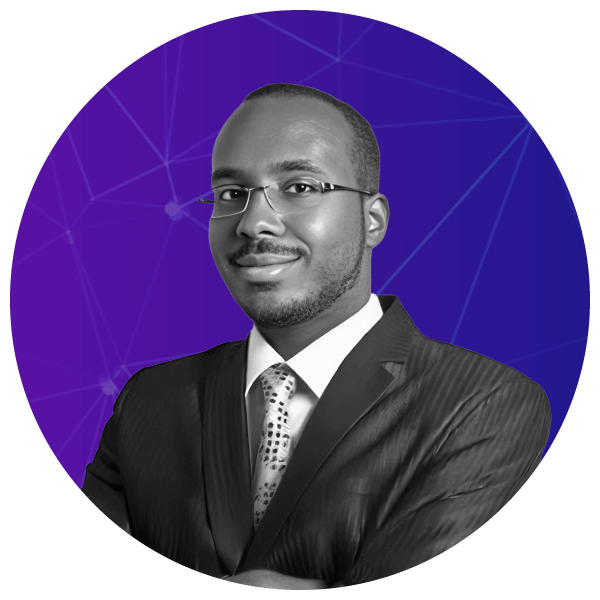
Awad Ahmed Ali El-Sidiq
Head of Artificial Intelligent & Analytics,
Adnoc Distribution

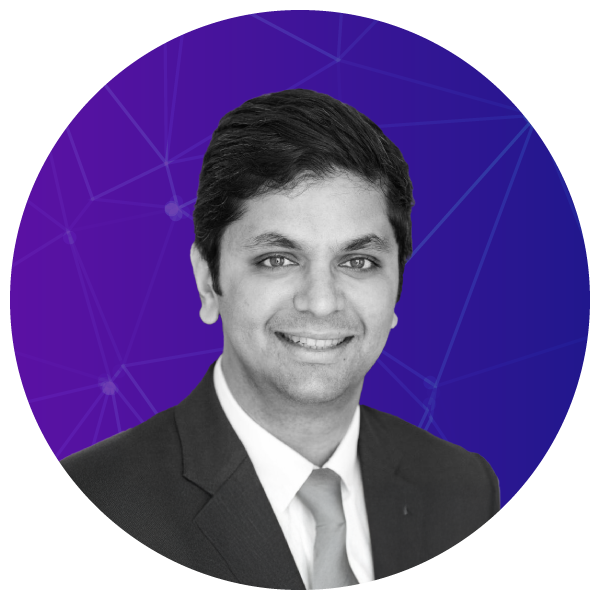
Srimanth Rudraraju
Group Director of Engineering,
London Stock Exchange Group (LSEG)

Paul Potgieter
Director – Technology and Platforms,
NEOM

Nizar Hneini
Senior Partner,
Roland Berger
Moderator:

Jennifer George
Correspondent,
MIT Sloan Management Review Middle East
Autonomous agents that run continuously rather than responding to a single prompt place different demands on infrastructure than conventional AI workloads. This session examines what inference serving, accelerator economics, and state persistence actually look like when an agent’s session can run for hours rather than seconds.
Autonomy doesn’t remove responsibility, it just makes it harder to locate. This panel examines who actually carries the consequences when an autonomous agent gets it wrong: the team that deployed it, the vendor that built it, or the leadership that signed off on giving it the authority to act, and how accountability frameworks are evolving to keep pace.
Autonomous agents that run continuously rather than responding to a single prompt place different demands on infrastructure than conventional AI workloads. This session examines what inference serving, accelerator economics, and state persistence actually look like when an agent’s session can run for hours rather than seconds.
The distinction between a conversational assistant and a genuinely agentic system lies in orchestration: the ability to plan, execute, verify, and hand off across multiple steps without intervention. This session examines what that requires in practice, from multi-agent coordination patterns to protocols that let separate agents work together, and where most enterprise deployments are still behind.
Autonomous execution changes the security posture an enterprise needs. This session addresses what it actually takes to treat agents as identities in their own right, with their own permissions and audit trails, and what guardrail and red-teaming practices look like when the primary risk may be an internal agent acting on wrong data.
Survey data consistently shows a wide gap between organizations experimenting with agentic AI and the smaller number scaling it successfully. This keynote examines what the research identifies as the structural differences between the two, and where leadership teams most often make the wrong call.
Governing a handful of agents and governing several hundred operating across departments are different problems entirely. This session examines what is required to maintain visibility, accountability, and control once agentic AI shifts from pilot to core infrastructure.
Production tells a different story than the pilot deck. Leaders who have already deployed agentic AI at scale discuss what broke first once the system went live, where the technology stack did not hold up against real operating conditions, and what they would change with the experience they have now.

Dylan Hadfield-Menell,
Assistant Professor,
MIT Computer Science & AI Lab
With eighteen months left on the clock, the question is no longer whether agentic AI will reshape the enterprise but whether the technology is actually ready to do it at scale. This conversation examines what still needs to be solved at the infrastructure, orchestration, and governance layers before agentic AI can be trusted with the decisions that matter most.
Copyright © MIT Sloan Management Review Middle East. All rights reserved.
|
|
Thank you for Signing Up |

Kaustubh Wagle is a Managing Director and Partner at Boston Consulting Group in the Middle East. He is a core member of the Telcoms, Media and Technology practice, and leads the Tech Capital sector. With over a decade of consulting experience, he advises TMT and PE/VC clients on strategy, operations and investments topics across Telco, AI, cybersecurity, e-commerce, IoT, FinTech and other digital plays. Kaustubh has been pivotal in establishing major tech initiatives, including MENA’s largest tech fund and multiple high-profile joint ventures, and has been supporting growth agendas for multiple Telco and Tech players.

Rahul Lakhanpal, currently the VP, Product Marketing, Darwinbox, backed by 16+ years of shaping global SaaS strategy at Workday, BrowserStack, SAP, and more. With a career spanning product management to global go-to-market leadership, Rahul Lakhanpal transforms market needs into intuitive, high-impact technology solutions. A storyteller at the intersection of business and technology, Rahul Lakhanpal brings 16+ years of experience turning product vision into customer success worldwide.

Sana Agents turns your company’s knowledge and systems into a secure, orchestrated AI workforce—built to deliver outcomes from day one. Sana Agents connect to your content, apps, and data to understand context, take action, and drive results across every team—sales, operations, legal, R&D, finance, HR, marketing, support, and more. Automate multi-step workflows that adapt to real events and keep humans in the loop where judgment matters. Draft board-ready reviews, build decks and docs, and generate charts from live data—current, cited, and easy to share. Ask in plain English and get instant, actionable data analysis—no code, no waiting. With open APIs and deep integrations, Sana fits into the tools your people already use, while governance, permissions, and audit trails give you control. Beyond software, our experts guide adoption so change sticks and impact compounds. Meet us in Dubai to see agentic AI in action at the MIT SMR Middle East AI Research Forum.

Nizar Hneini is a Senior Partner who leads the Digital and Services Practice in the Middle East region and manages Roland Berger’s Qatar Office. He joined the company in 2024 and has extensive experience in the consulting industry with previous leadership roles in Europe, The US, The Middle East and Africa. Nizar advises clients since over two decades on strategy development and execution, business and digital transformations, corporate venturing, policy and regulation, setting up and overseeing the execution of major technology and IT programs with industry focus spanning telecommunications, technology, public sector, and energy.

ManageEngine is a division of Zoho Corporation and a leading provider of IT management solutions for organizations across the world. With a powerful, flexible, and AI-powered digital enterprise management platform, we help businesses get their work done from anywhere and everywhere—better, safer, and faster. To learn more, visit www.manageengine.com.

Faisal Hamady is a Managing Director and Partner at Boston Consulting Group, where he leads the global Digital Economy topic and Innovation for Economic Development. Based in the Middle East, he advises governments and leading organizations on technology-driven economic transformations, with a focus on digital economy, deep tech, AI, and space. His recent work includes shaping national strategies, ecosystem development funds, and innovation districts. Before BCG, Faisal worked at Intel in the US and cofounded a digital retail startup.

Coursera is the global online learning platform that offers anyone, anywhere access to online courses and degrees from world-class universities and companies. Coursera partners with more than 350 leading universities and companies to bring flexible, affordable, job-relevant online learning to individuals and organizations worldwide. We offer a range of learning opportunities—from hands-on projects and courses to job-ready certificates and degree programs.
Equip citizens and government employees with in-demand skills Drive sustainable economic growth and build a competitive workforce with online learning from leading universities and companies.

Paul Potgieter is shaping how digital systems and intelligent infrastructure accelerate NEOM’s ambition to build a cognitive, adaptive city. His focus is on embedding scalable digital platforms that power new economic models and drive differentiated value in an era of AI-native urban development.

Awad Ahmed Ali El-Sidiq is driving the transformation of energy infrastructure through AI-powered analytics at ADNOC Distribution. With over 15 years of experience across enterprise data systems and large-scale AI implementations, he has pioneered advanced machine learning use cases in the oil and gas sector that deliver tangible business outcomes. His work enables data to operate as an intelligent asset—powering faster, more adaptive decision-making across the organization. Recognized globally for his leadership in enterprise AI and database architecture, he continues to push the boundaries of what AI can achieve in one of the world’s most vital industries.

Srimanth is a senior technology leader and currently serves as the Director of Engineering for Data & Analytics at the London Stock Exchange Group (LSEG).
With a distinguished career across leading financial institutions including HSBC, JP Morgan, and Lloyds Banking Group, he brings deep expertise in data strategy, large-scale cloud transformation, and building high-performing engineering organisations.
Srimanth is known for driving innovation in complex, regulated environments and is passionate about creating inclusive, future-ready data platforms that deliver real business impact.

Jithin George designs and builds agentic AI systems that operate with autonomy, context awareness, and real-time decision-making capabilities.
His work focuses on creating AI agents that can reason, act, and adapt across complex environments—bridging the gap between intent and execution in enterprise and developer workflows.

Tim Kraska is an Associate Professor at MIT CSAIL and founding co-director of the Data System and AI Lab (DSAIL). His research explores how machine learning can transform the foundations of data systems—improving performance, adaptability, and user interaction.
From rethinking core components with learned models to building intelligent interfaces for data science, his work enables more autonomous, accessible, and trustworthy AI systems at scale.

Dylan Hadfield-Menell is a leading researcher in AI alignment and directs the Algorithmic Alignment Group at MIT CSAIL. His work focuses on ensuring that agentic AI systems behave in ways that reflect human goals, values, and oversight, particularly in multi-agent and human-AI contexts.
As a Schmidt Sciences AI2050 Fellow, he is advancing methods to support the safe, beneficial, and trustworthy deployment of AI in the real world.

Geoffrey Alphonso is the CEO of Alef Education and a transformational leader in the EdTech sector.
With over 20 years of global experience across North America, Australia, and the Middle East, he has led Alef’s growth into an AI-powered education platform reaching hundreds of thousands of students across multiple countries.
Geoffrey is passionate about using emerging technologies to shape the future of learning and sits on advisory boards focused on expanding digital access in underserved communities. He holds an MBA from London Business School.

Dr. Dirk Jungnickel leads Enterprise Data & Analytics at Emirates Group, overseeing the organization’s AI, data science, and business intelligence capabilities.
With a background in theoretical physics and over two decades in senior roles across industries, he brings a systems-level perspective to the design and governance of enterprise AI.
His work focuses on scaling data-driven decision-making while ensuring alignment, transparency, and operational impact.

Munther A. Dahleh is the William A. Coolidge Professor of Electrical Engineering and Computer Science at MIT and the founding director of the MIT Institute for Data, Systems, and Society (IDSS).
His research explores decision-making under uncertainty, networked systems, and the economics of data, drawing on fields from control theory to distributed learning.
He leads cross-disciplinary efforts at MIT to understand how data and algorithms shape complex systems, from financial and power networks to social and neural systems.

Dr. Fatma Tarlaci is an engineering leader with a decade of expertise in AI. Formerly, she served as CTO and VP of Engineering at startups, where she led the development and deployment of robust AI solutions and led high-impact engineering teams.
As a technical advisor, she helps startups navigate AI adoption and productization, while also training the next generation of AI engineers and data scientists as an Adjunct Assistant Professor in Computer Science at UT Austin.
She recently stepped into the role of Chief AI Officer at SOAR AI, where she combines strategic leadership with hands-on development and helps guide the technical direction of their AI initiatives.

Anirudh Narayan focuses on accelerating the adoption of agentic AI by bridging technical innovation with real-world application.
With a background in growth strategy and data-driven product development, he works at the intersection of AI deployment and business transformation, enabling organizations to unlock new forms of scale and autonomy through intelligent agents.

Marek Kowalkiewicz is Professor and Chair in Digital Economy at QUT Business School and a leading voice on the intersection of AI, business, and society.
Recognized by Thinkers360 as one of the Top 100 Global AI Thought Leaders, he is the author of The Economy of Algorithms: AI and the Rise of the Digital Minions, winner of the 2024 Australian Business Book Award in Technology.
Marek previously led innovation teams in Silicon Valley, established SAP’s Machine Learning Lab in Singapore, and held research appointments at Microsoft Research Asia.
His current work focuses on how algorithmic systems shape decision-making, redefine value creation, and challenge traditional notions of agency in business leadership.

Munjal Shah is the co-founder and CEO of Hippocratic AI, a company building the first safety-focused large language model for healthcare.
A serial entrepreneur with a track record in AI and machine learning, he has founded and led multiple startups at the intersection of technology and healthcare, with previous ventures acquired by Google and Alibaba.